
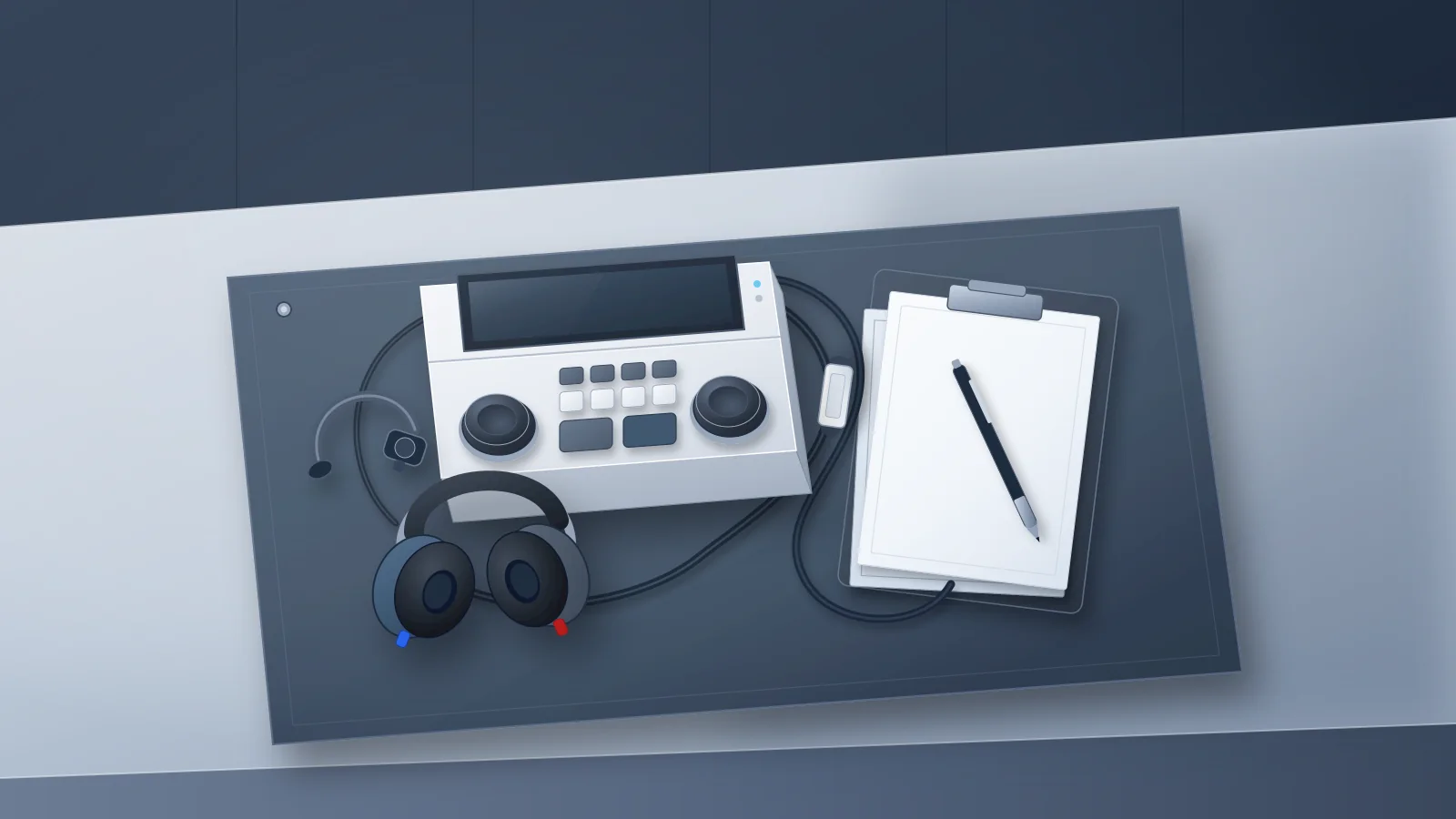
Suppose an Interacoustics AD629 hybrid diagnostic audiometer passed this morning's listening check and your screening clinic opens in an hour, but the calibration certificate in the equipment binder lists earphone serial numbers that do not match the headset currently plugged into the console. Is a required control actually missing, and can today's passing daily check cover the discrepancy?
Yes—a critical record is missing, and no daily functional check can close that gap. Daily functional checks and formal calibration are two separate jobs with different owners, intervals, and verification records. Under OSHA 29 CFR 1910.95(h)(5)(i), the operator checks functional operation before each day's use by testing a person with known, stable hearing thresholds (CAOHC guidance also describes a bio-acoustic simulator for this output check) and listening to the output for distorted or unwanted sounds, with any deviation of 10 dB or greater requiring an acoustic calibration. For the AD629 specifically, the US Instructions for Use (D-0126433-D, 2024/06, Section 4 Maintenance) directs that routine check procedures be carried out weekly in full on all equipment in use, with checks 1 through 9 performed on each day of use—including verifying that earphone and bone vibrator serial numbers are correct for use with that audiometer (check 4), running a simplified audiogram on a known test subject across air and bone conduction (check 5), and completing a high-level listening check across all frequencies used (check 6), with the entire system checked as installed when a sound booth is used.
Formal calibration, by contrast, is a scheduled, measured event—annual or biennial depending on the governing rule—performed by qualified service personnel with coupler-based measurement equipment on the console and the transducers it will be used with. Because the AD629 IFU states that only transducers calibrated with the actual AD629 are valid for use—and that the AD629 serial number is marked on the transducer to identify a valid calibration—a certificate listing different transducer serials does not cover the headset on the bench. This guide separates routine operator checks from formal calibration, provides an AD629-scoped evidence matrix, maps program-specific cadence rules, and lists the records clinical engineering and screening teams should verify before patient testing.
Two Different Jobs: What a Daily Functional Check Can and Cannot Tell You
Confusion between daily checks and formal calibration starts with vocabulary. Occupational hearing-conservation programs and state screening manuals often refer to the operator's threshold check on a human listener as a "biological calibration" or "daily calibration check." Many vendor service pages compress the entire maintenance conversation into a single statement that audiometers require annual calibration. When clinical engineering (HTM) and clinic staff treat both activities as interchangeable versions of "calibration," two opposite failure modes appear: either staff skip daily checks because the annual sticker is still current, or a clinic assumes a passing morning listening check excuses a swapped headset or an overdue coupler calibration.
The regulatory and manufacturer texts draw a sharp boundary between the two activities:
Daily or pre-use functional checks screen for gross drift and hardware defects in the installed room. In occupational programs governed by 29 CFR 1910.95(h)(5)(i), functional operation must be checked before each day's use by testing a person with known, stable hearing thresholds and listening to the audiometer's output for distorted or unwanted sounds. CAOHC functional-check guidance notes that a bio-acoustic simulator can stand in for the known-threshold listener on the output check. The Interacoustics AD629 US IFU (D-0126433-D, 2024/06) calls this workflow "routine checking" and describes its purpose as confirming that the equipment is working properly, that its calibration "has not noticeably changed," and that transducers and connections are free from defects—a screen for change, not a measurement. It adds that the most important elements in daily performance checks are subjective tests carried out by an operator with unimpaired and preferably known good hearing.
Formal calibration measures and adjusts electroacoustic output against consensus standard tolerances. Under 29 CFR 1910.95(h)(5)(ii)–(iii), occupational programs require an acoustic calibration check at least annually in accordance with Appendix E (sound pressure output measured with a sound level meter, octave-band filter set, and NBS 9A coupler) and an exhaustive calibration at least every two years in accordance with ANSI S3.6-1969. For the AD629, the US IFU recommends annual calibration "due to possible impact on transducers" and states that the calibration procedure itself is in the service manual, which is available on request.
Understanding what a passing morning check leaves unproven is essential for risk management. Just as a passing pulse oximeter simulator test confirms a monitor's signal path without proving clinical SpO2 accuracy, and a daily spirometer syringe check confirms day-of-use volume readings without standing in for scheduled calibration, an audiometer listening check only confirms that tones are present, free of obvious distortion or clicks, and roughly consistent with one known listener's thresholds. It cannot measure output in decibels against a standard. The daily screen is built to catch gross change: under 29 CFR 1910.95, a 10 dB deviation on the daily check triggers an acoustic calibration, yet Appendix E advises an exhaustive calibration when the acoustic check finds output off by 3 dB between 500 and 3000 Hz, 4 dB at 4000 Hz, or 5 dB at 6000 Hz. A shift well inside the daily trigger can therefore still matter. That is most likely after a drop: the AD629 IFU warns that mechanical shock may change calibration, which is why it calls for recalibration after a headset or bone conductor is dropped on a hard surface rather than relying on the next daily check.
The AD629 Evidence Matrix: Daily Checks, Weekly Routine, Annual Calibration
Because routine check items, listening levels, and applied-part configurations vary across manufacturers, an operational checklist must be scoped to a specific model rather than presented as a universal rule. The matrix below is built directly from Section 4 (Maintenance) of the Interacoustics AD629 US Instructions for Use (D-0126433-D, 2024/06) for the AD629 hybrid standalone and PC-based diagnostic audiometer, whose applied parts include the DD45 air-conduction headset and B71 bone conductor.
The AD629 IFU recommends a two-tier operator routine alongside annual service calibration: carry out the routine check procedures weekly in full on all equipment in use, and follow checks 1 through 9 on each day of use. Crucially, when the audiometer is used with a sound booth or separate test room, the IFU directs that the equipment be checked as installed—the checks then cover the interconnections between the audiometer and the booth equipment, and all connecting leads, plugs, and socket connections at the junction box on the sound-room wall should be examined as potential sources of intermittency or incorrect connection. The IFU notes that an assistant may be needed to do this.
| AD629 Verification Step (US IFU Section 4) | Cadence | Owner | What to Verify at the Installed System | Record & Escalation Trigger |
|---|---|---|---|---|
| Checks 1–3: Clean and examine, inspect cushions and leads, warm-up | Each day of use (and weekly in full) | Operator / screening staff | Clean and examine the audiometer and all accessories; check earphone cushions, plugs, main leads, and accessory leads for wear or damage; switch on and allow the recommended warm-up (the IFU says 5 minutes if no period is quoted). | Daily check log entry. The IFU says damaged or badly worn parts should be replaced; any replacement headset, earphone, or bone vibrator must pass the serial check (next row) before use. |
| Check 4: Transducer serial-number verification | Each day of use (and weekly in full) | Operator / screening staff | Confirm the earphone and bone vibrator serial numbers are correct for this audiometer; the IFU marks the AD629 serial on each calibrated transducer. Cross-check against the transducer serials on the current calibration certificate. | Daily check log entry; stop before testing if the attached transducers are not marked for this AD629 or do not match its current certificate. |
| Check 5: Simplified audiogram on a known test subject | Each day of use (and weekly in full) | Operator with good hearing, testing a subject with known hearing | Run a simplified air- and bone-conduction audiogram on the known subject to confirm output is approximately correct, with the system as installed (booth leads and junction box included). | Daily threshold log; any change against the known thresholds escalates under the program rule (OSHA: 10 dB or more requires an acoustic calibration). |
| Check 6: High-level listening check (IFU example: 60 dB HL AC / 40 dB HL BC) | Each day of use (and weekly in full) | Operator / screening staff | At high level, on all appropriate functions, both earphones, and all frequencies used, listen for proper functioning, absence of distortion, and freedom from clicks. | Daily check log; remove from service if distortion or clicks persist after confirming external plugs are fully seated. |
| Checks 7–9: Transducer and lead intermittency, controls, patient signal | Each day of use (and weekly in full) | Operator / screening staff | Check all earphones (including the masking transducer) and the bone vibrator for distortion and intermittency, and plugs and leads for intermittency; confirm switch knobs are secure and indicators work; confirm the subject response signal operates. | Daily check log; tag out of service if intermittency persists after reseating external plugs, or if the response signal fails. |
| Full weekly routine (checks 1–9 plus checks 10–15) | Weekly in full on all equipment in use | Operator (with an assistant if booth-installed) | Adds low-level listening for noise, hum, and cross-channel break-through; attenuator range and attenuator noise; silent controls; subject communication circuits; headband tension and swivel joints; and wear or metal fatigue on headband hardware. | Weekly check log kept with the audiometer; escalate any mechanical or acoustic anomaly to HTM or qualified service. |
| Formal calibration and post-drop recalibration | Annually (IFU recommendation) and after drastic events such as a dropped headset or bone conductor | Qualified service personnel (HTM or calibration vendor) using the service-manual procedure | Coupler-based measurement of the console with its serial-matched transducers; the IFU names the couplers behind each transducer's reference levels (for example, an IEC 60318-3 or NBS 9A coupler for the DD45 and a mechanical coupler for the B71). | Calibration certificate plus CMMS work order listing the AD629 serial, transducer serials, standard edition, and as-found/as-left data. |
Notice how the installed-booth requirement in the AD629 IFU changes fault isolation. When an audiometer sits outside a sound booth and drives earphones through a wall-mounted junction box, a loose plug or fatigued patch lead there can cause intermittent drop-outs or an incorrect connection that would not show up on a bench check with the headset plugged straight into the console. Checking the system as installed catches booth wiring faults before a patient sits down.
Transducer Serials: The Detail That Decides Whether Your Calibration Is Valid
One gap a daily listening check cannot close is an unverified transducer swap. The scenario is easy to create: when a cord frays or an earcup cuts out mid-clinic, borrowing a headset of the same model from a backup audiometer keeps testing moving, and to the listener it sounds the same.
The AD629 US IFU (Section 4 Maintenance) rules this out: only transducers calibrated with the actual AD629 are valid for use, and to identify a valid calibration, the serial number for the AD629 is marked on the transducer. That is why Check 4 of the daily AD629 routine requires verifying that the earphone and bone vibrator serial numbers are correct for use with the audiometer before a single tone is presented.
The reason is metrological. The hearing level an audiometer delivers is established during calibration with specific transducers connected, and the AD629 IFU lists separate reference levels and couplers for each transducer type it supports (DD45, TDH39, DD65 v2, DD450, IP30, B71, and B81). A same-model headset taken from another audiometer was not part of this instrument's calibration, so the dB HL setting no longer describes what reaches the ear, and a subjective listen will not reveal by how much.
When clinical engineering performs an incoming inspection or audits an existing service file—applying the same field-by-field verification discipline covered in our guide on how to read and audit a medical equipment calibration certificate and our model-scoped review of capnograph calibration before return to service—four serial checks should pass before the audiometer is cleared for clinical use:
Console serial number: Verify that the serial number on the AD629's own label matches the instrument serial number recorded on the calibration certificate.
Transducer marking check (AD629 IFU rule): Confirm that the attached headset and bone vibrator carry the marking tying them to that specific AD629 serial number, as required by the AD629 IFU.
Left, right, and bone transducer serials on the certificate: Match the individual serial numbers marked on the left earphone, right earphone, and bone vibrator (plus any insert earphones, if used) against the transducer serial numbers itemized on the calibration certificate.
Post-replacement recalibration gate: If any earphone, headset assembly, or bone vibrator was replaced during repair, verify that a new calibration covering the console with the replacement transducer serials was completed before the system returns to service.
The same logic applies when the audiometer leaves the building. CAOHC advises that an audiometer shipped out for annual calibration or repair should travel with its earphones, response switch, and all connecting cords so the complete system can be evaluated. A console calibrated without its own transducers returns with a certificate that cannot describe the system the clinic actually uses.
Which Cadence Rule Applies to Your Program
A recurring weakness in vendor calibration guides is presenting a single interval table as if one federal law governed every audiometer in the United States. In reality, the legally enforceable cadence, numeric decibel trigger, and required form depend on whether the instrument operates in an OSHA-regulated occupational hearing-conservation program, a state-regulated school or community screening program, or a hospital outpatient clinic subject to Medicare Conditions of Participation.
Even within OSHA's occupational noise standard, some secondary summaries misstate the citation structure by attributing the three calibration levels to Appendix E. In the actual text of 29 CFR 1910.95, the three calibration tiers and their mandatory intervals are established by paragraph (h)(5)—specifically 1910.95(h)(5)(i) for daily functional checks, 1910.95(h)(5)(ii) for annual acoustic calibration checks, and 1910.95(h)(5)(iii) for biennial exhaustive calibration—while Appendix E specifies the acoustic calibration procedure: a sound pressure output check through an NBS 9A coupler, a linearity check, and the tolerances that make an exhaustive calibration advisable (3 dB from 500 to 3000 Hz, 4 dB at 4000 Hz, 5 dB at 6000 Hz) or required (15 dB or greater).
| Program / Regulatory Regime | Routine Operator Check Cadence | Numeric Escalation Trigger | Formal Calibration Cadence | Required Documentation |
|---|---|---|---|---|
| OSHA Occupational Hearing Conservation (29 CFR 1910.95(h)(2), (h)(5), (m)) | Before each day's use: test a person with known, stable thresholds and listen for distorted or unwanted sounds (CAOHC also describes a bio-acoustic simulator for the output check). | 10 dB or greater deviation on the daily check requires an acoustic calibration; 15 dB or greater deviation on the acoustic check requires an exhaustive calibration. | Acoustic calibration check at least annually per Appendix E; exhaustive calibration at least every 2 years per ANSI S3.6-1969. | Each audiogram record must include the date of the last acoustic or exhaustive calibration (1910.95(m)(2)(ii)(D)); audiometric test records are kept for the duration of employment. The rule sets no separate retention period for calibration certificates. |
| Texas DSHS School / VHSS Screening (Texas DSHS Monthly Biological Calibration) | Monthly biological calibration in each month the audiometer is used for screening, against baseline hearing records for three adult staff members. | 5 dB or greater difference at any screening frequency (250–6000 Hz) on one person, confirmed in the same direction on another baseline person; or a distorted signal or attenuator/tone switch transients. | Electronic calibration whenever the confirmed 5 dB change or a signal defect appears; the program covers annual electronic calibration on a separate page. | Record monthly biological check results on Texas DSHS Form M-45 and keep Form M-45 physically with the audiometer. |
| Hospital Outpatient / Audiology Clinic (42 CFR 482.41(d)(2) + AD629 US IFU) | Follow manufacturer IFU: for AD629, checks 1–9 on each day of use and full routine check weekly on all equipment in use. | No numeric trigger in the rule or the IFU: escalate on a transducer serial mismatch (check 4), any change on the known-subject audiogram (check 5), distortion or clicks on the high-level check (check 6), or a drop. | Annual calibration recommended by AD629 IFU, plus immediate recalibration after any drastic event such as a dropped headset or bone conductor. | Hospital CMMS inspection and calibration records plus the clinic's daily and weekly check log, as evidence for the equipment-maintenance duty in 482.41(d)(2). |
The contrast between OSHA and the Texas Department of State Health Services (DSHS) Vision, Hearing, and Spinal Screening program illustrates why clinical engineering teams must ask which rule governs the clinic before setting CMMS reminders. Texas DSHS requires monthly biological calibration (in months the audiometer is used), mandates baseline hearing records for three adult staff members (specifying that only adult staff may serve as baseline subjects), and sets a tighter 5 dB confirmation trigger across 250 to 6000 Hz documented on Form M-45 kept with the audiometer. Meanwhile, a hospital-based diagnostic clinic falls under 42 CFR 482.41(d)(2), which requires facilities, supplies, and equipment to be maintained to ensure an acceptable level of safety and quality. The rule text names no audiometer interval, so the hospital's equipment-management program has to define and document one; for an AD629, the IFU's daily, weekly, and annual recommendations are the manufacturer baseline that program starts from. Laboratory instruments show the same split between a program-specific rule and the hospital maintenance duty, as covered in our guide to laboratory analyzer calibration verification after repair.
When the Daily Check Fails: Escalate, Never Adjust
When an audiometer fails a pre-use check, the temptation in a busy screening clinic is to work around the fault—jiggling a cord until the tone comes back, swapping in a spare headset that was never calibrated with this console, or mentally adding 10 dB to a threshold reading. Each of those workarounds undermines every audiogram recorded afterward.
flowchart TD
    A["Start pre-use check at the installed system (AD629 checks 1-9)"] --> B{"Check 4: Earphone and bone vibrator marked for this AD629 and listed on the current certificate?"}
    B -- "No" --> H["STOP TESTING: tag out and escalate to qualified service for calibration"]
    B -- "Yes" --> C{"Headset or bone conductor dropped or otherwise shocked since last calibration?"}
    C -- "Yes" --> H
    C -- "No" --> D["Check 5: known-subject audiogram"]
    D --> E{"Threshold change at or above the program trigger (OSHA 10 dB, Texas confirmed 5 dB)?"}
    E -- "Yes" --> H
    E -- "No" --> F["Checks 6-9: high-level listen, intermittency, controls, response signal"]
    F --> G{"Distortion, clicks, or intermittency?"}
    G -- "No" --> K["Record daily log and proceed with testing"]
    G -- "Yes" --> I["Reseat external plugs and booth junction-box connections only"]
    I --> J{"Checks 1-9 now pass cleanly with the same transducers?"}
    J -- "Yes" --> K
J -- "No" --> HThe regulation, the state program, and the manufacturer's instructions set clear escalation triggers and a service boundary:
Threshold deviations at the program trigger require calibration: Under 29 CFR 1910.95(h)(5)(i) and CAOHC guidance, a deviation of 10 dB or greater on the daily functional check requires an acoustic calibration, and CAOHC says it must be performed before use. Under Texas DSHS screening rules, a 5 dB or greater change at any screening frequency (250–6000 Hz), confirmed in the same direction on a second adult baseline person, means the audiometer needs electronic calibration.
A dropped transducer calls for recalibration even if the morning listen sounds normal: The AD629 US IFU says recalibration is required if something drastic happens to a part of the instrument—for example, a headset or bone conductor dropped on a hard surface—and warns that mechanical shock may change calibration.
External booth connection check vs. qualified service boundary: If intermittency appears during the listening check in a sound booth, the AD629 IFU lists booth interconnections, leads, plugs, and socket connections at the junction box as potential sources of intermittency. If reseating external plugs does not clear the problem, or if the issue is output level or attenuator behavior rather than a connection, stop testing and escalate.
The Records That Must Exist and Where They Live
When an OSHA compliance officer, state screening auditor, or hospital accreditation surveyor reviews hearing testing equipment, a calibration sticker on the side of the audiometer is rarely enough on its own. A defensible file links three records that agree on dates, serial numbers, and standard editions:
Calibration date recorded on each employee audiogram (OSHA 1910.95(m)): Under 29 CFR 1910.95(m)(2)(ii)(D), every occupational audiometric test record must include the date of the last acoustic or exhaustive calibration of the audiometer, and paragraph (m)(3) requires audiometric test records to be kept for the duration of the employee's employment. The rule sets no separate retention period for calibration certificates, so keeping the certificate behind each recorded date retrievable is the practical way to support that field. If an annual acoustic calibration is performed in October, verify that the audiometry software or paper form updates the calibration date on subsequent test records.
Equipment-side functional check log kept with the audiometer: Whether formatted as Texas DSHS Form M-45 for monthly school biological checks or a daily/weekly clinical check sheet covering AD629 checks 1 through 9, the functional log should live at the point of use. It should capture the date, operator identity, confirmation that the attached earphone and bone vibrator serials are correct for the console (Check 4), the known subject's simplified audiogram result (Check 5), and the high-level listening check with the levels used (Check 6).
CMMS work order and itemized calibration certificate: Following the documentation structure outlined in our standard on what a medical equipment service work order must contain, the HTM record should archive the full calibration certificate, not just a pass/fail summary. The certificate should list the audiometer model and serial number, the model and serial number of every calibrated earphone and bone vibrator, the coupler types used, as-found and as-left acoustic measurements across frequencies, the reason for service (scheduled annual calibration, a drop, or a 10 dB functional-check escalation), and the standard edition applied.
Standards Edition Drift: 1969, 1996, 2018, 2025
Biomedical engineers auditing audiometer calibration certificates often notice four different editions of the ANSI S3.6 audiometer standard—1969, 1996, 2018, and 2025—alongside international IEC and ISO standards. Understanding why each edition appears prevents teams from either rejecting a valid regulatory citation or accepting an outdated calibration template.
ANSI S3.6-1969 (OSHA Incorporation by Reference): 29 CFR 1910.95(h)(2) and (h)(5)(iii) incorporate ANSI S3.6-1969 by reference for occupational audiometers and for the sections an exhaustive calibration must cover.
ANSI S3.6-1996 (FDA 510(k) Exemption Regulation): Under 21 CFR 874.1050, FDA classifies the audiometer (an electroacoustic device producing controlled levels of test tones and signals for diagnostic hearing evaluations) as a Class II device. The codified regulation exempts audiometers (except otoacoustic emission devices) from premarket notification if compliant with ANSI S3.6-1996, subject to the limitations of 21 CFR 874.9.
ASA/ANSI S3.6-2025 vs. S3.6-2018 (Current FDA Consensus Standard Recognition): FDA's recognized consensus standards database lists ANSI/ASA S3.6-2025, Specification for Audiometers with a date of entry of December 22, 2025 (Recognition List 065, Recognition Number 4-350), complete recognition, and the audiometer regulation 21 CFR 874.1050 (product code EWO). The entry describes the standard as providing specifications and tolerances for pure-tone, speech, and masking signals and methods and requirements for calibrating audiometers. It supersedes ANSI/ASA S3.6-2018 (Reaffirmed 2023, Rec# 4-275); FDA will accept premarket declarations of conformity to the 2018 edition only until December 19, 2027. The ANSI announcement of the 2025 edition says the revision introduces no new technical changes and that changes are not intended to be retroactive to audiometers manufactured and calibrated to an earlier version. The practical consequence for HTM: an audiometer built and calibrated to an earlier edition is not automatically out of step with the 2025 text, so a certificate is only interpretable if it names the edition used.
IEC 60645-1:2017 and ISO 8253-1:2010 (International Equipment & Test-Method Standards): The AD629 US IFU cites IEC 60645-1 (2017), ANSI S3.6 (2010), and ISO 8253-1 (2010). In the international framework—reviewed in a 2023 Journal of Audiology and Otology standards exploration—IEC 60645-1:2017 (fourth edition, stability date 2027, TC 29) is the equipment standard that merges pure-tone and speech audiometer requirements; it aims to ensure that hearing tests from 125 Hz to 16 kHz on different compliant audiometers give substantially the same results, whereas ISO 8253-1:2010 (second edition, replacing the 1989 edition) specifies pure-tone air and bone conduction test procedures, including maximum permissible ambient noise levels in audiometric rooms; for screening purposes, only pure-tone air-conduction test methods are specified.
| Standard & Edition | Regulatory or Technical Role | What HTM Should Verify on Certificates & Records |
|---|---|---|
| ANSI S3.6-1969 | Incorporated by reference in OSHA 29 CFR 1910.95(h)(2) and (h)(5)(iii) for occupational hearing-conservation programs. | For OSHA programs, confirm the file shows the annual acoustic check (Appendix E) and the exhaustive calibration (at least every two years) as separately dated events, since (h)(5) sets different intervals and triggers for each. |
| ANSI S3.6-1996 | Codified reference in 21 CFR 874.1050 for Class II audiometer 510(k) exemption (subject to 874.9). | Classification and premarket exemption baseline; sets no in-service calibration interval. |
| ANSI S3.6-2010 / 2018 (R2023) | 2010 is cited in the AD629 IFU; 2018 (Rec# 4-275) is the superseded FDA consensus standard accepted for premarket declarations until 2027-12-19. | S3.6-2025 changes are not intended to be retroactive to instruments manufactured and calibrated to an earlier edition; confirm the certificate states which edition was applied. |
| ASA/ANSI S3.6-2025 | Current edition in FDA's recognized standards database (entry 2025-12-22, List 065, Rec# 4-350); announced as introducing no new technical changes. | Verify that calibration vendors state the exact ANSI S3.6 edition used rather than printing an undated "ANSI S3.6" label. |
| IEC 60645-1:2017 & ISO 8253-1:2010 | IEC 60645-1:2017 sets audiometer equipment requirements for pure-tone and speech audiometry (125 Hz to 16 kHz); ISO 8253-1:2010 sets pure-tone test methods, including ambient noise limits. | Confirm that international equipment/test-method citations in the AD629 IFU are paired with program-specific calibration intervals and serial-matched transducer records. |